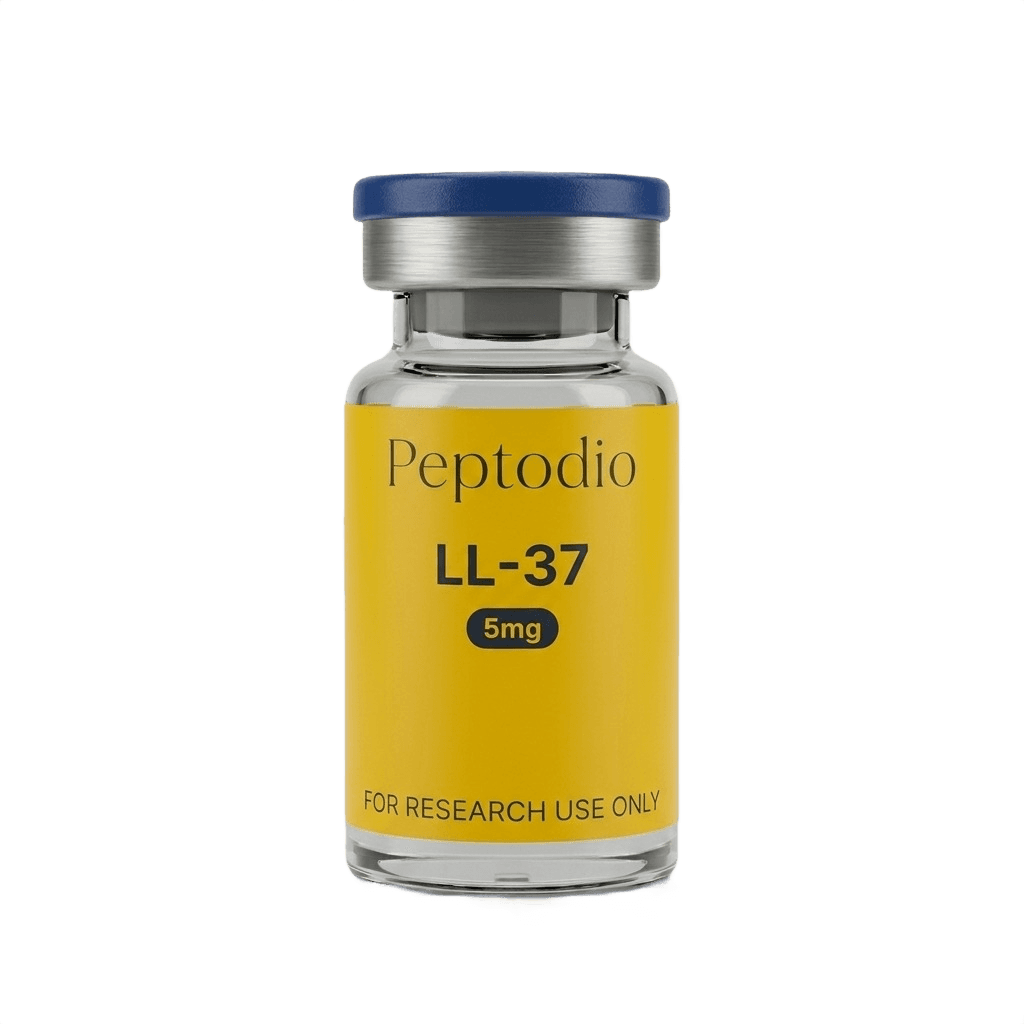
LL-37
5mg · 99%+ Purity
Description
LL-37 is a cathelicidin antimicrobial peptide researched for its immunomodulatory effects beyond direct pathogen killing. Studies explore its role in inflammation, wound healing, and angiogenesis models.
Disclaimer: The images on this page are for illustrative purposes only. Peptodio is an educational resource and does not sell any products, nor will we ever. We do not recommend or endorse any sellers or vendors. This information is provided for research and educational purposes only.
Research & Science
Evidence-based information about this compound
Chemical Properties
CAS Number
154947-66-7
Molecular Formula
C205H340N60O53
Molecular Weight
4493.33 g/mol
Amino Acid Sequence
LLGDFFRKSKEKIGKEFKRIVQRIKDFLRNLVPRTES
Also known as:
Cathelicidin, hCAP18, CAMP
LL-37 is the only cathelicidin-derived antimicrobial peptide found in humans. It consists of 37 amino acids beginning with two leucine residues (hence the name LL-37). This peptide is a crucial component of the innate immune system and is produced by immune cells, epithelial cells, and various other cell types.
Beyond its direct antimicrobial effects, LL-37 has been recognized as a multifunctional host defense peptide with roles in inflammation modulation, wound healing, angiogenesis, and immune cell regulation. Its discovery has opened new avenues of research in immunology and infectious disease.
LL-37 is naturally produced in response to infection and inflammation, where it serves as both a direct antimicrobial agent and an immune system modulator.
LL-37 functions through multiple mechanisms:
- Direct Antimicrobial: Disrupts bacterial, viral, and fungal membranes through its amphipathic structure.
- Immunomodulation: Modulates immune cell function, cytokine production, and inflammatory responses.
- Wound Healing: Promotes wound healing through effects on epithelial cells and angiogenesis.
- LPS Neutralization: Binds and neutralizes lipopolysaccharide (LPS), reducing endotoxin-induced inflammation.
- Chemotaxis: Acts as a chemoattractant for immune cells.
LL-37's antimicrobial properties have been extensively studied:
- Broad Spectrum: Active against gram-positive and gram-negative bacteria, fungi, and some viruses.
- Membrane Disruption: Kills microbes by disrupting their cell membranes.
- Biofilm Activity: May penetrate and disrupt bacterial biofilms.
- Resistance: Microbial resistance to LL-37 is less common than to conventional antibiotics.
These properties make LL-37 valuable for infectious disease research.
Beyond direct antimicrobial effects, LL-37 modulates immune responses:
- Cytokine Modulation: Influences production of both pro- and anti-inflammatory cytokines.
- Immune Cell Activation: Affects function of neutrophils, macrophages, and dendritic cells.
- Inflammation Balance: Can both promote and resolve inflammation depending on context.
- Adaptive Immunity: May bridge innate and adaptive immune responses.
This immunomodulatory capacity extends LL-37's research applications beyond simple antimicrobial use.
Sources:
This information is provided for educational purposes only and is based on published scientific research. This product is intended for research use only.