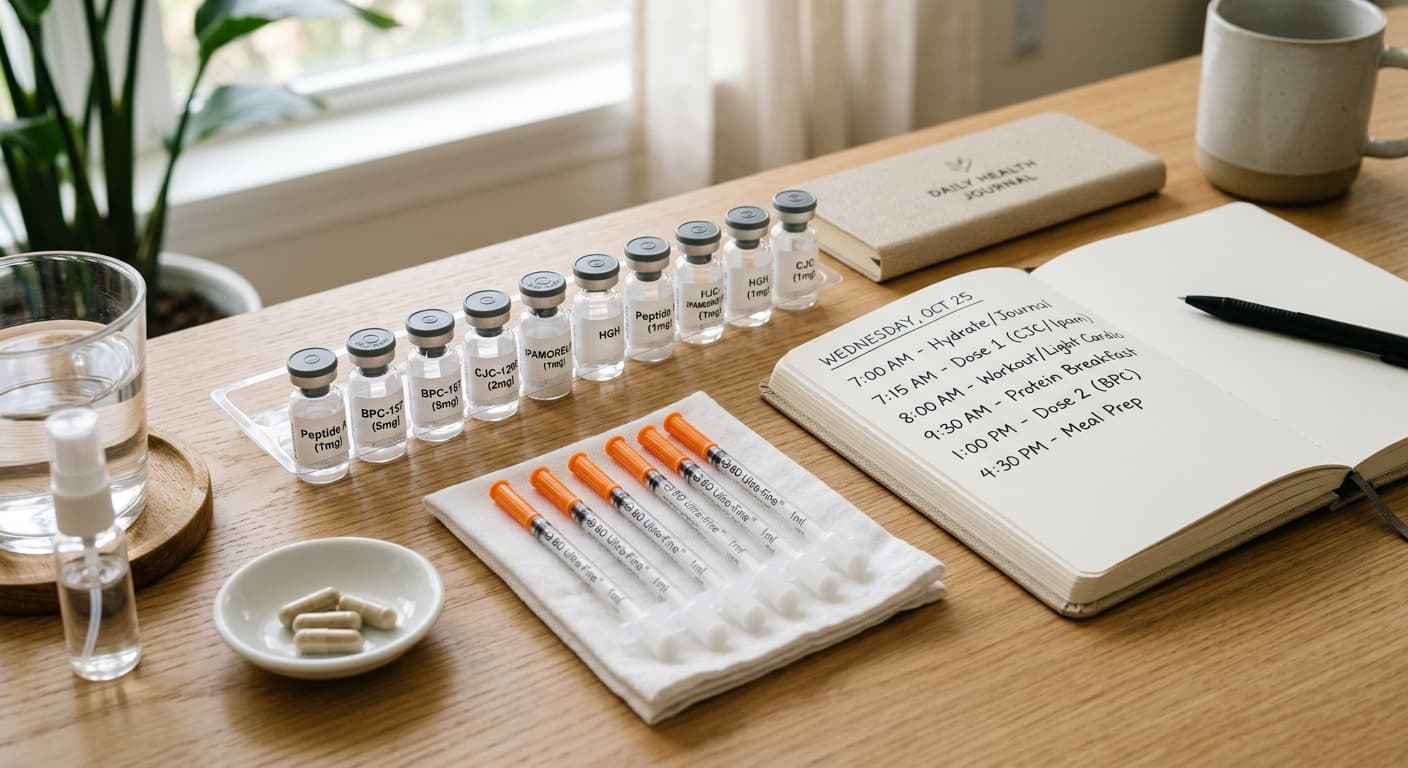
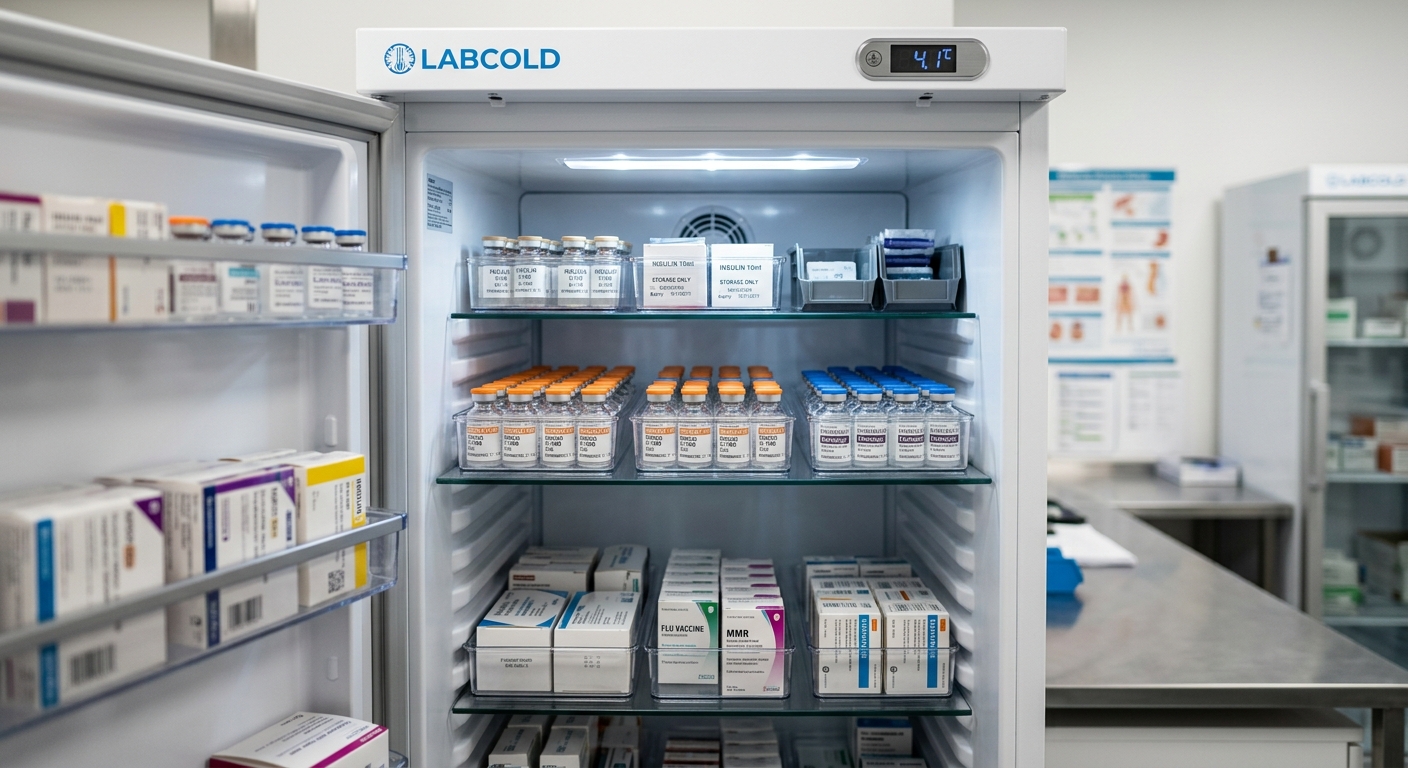
The Storage Question Everyone Asks
You've stocked up on peptides - maybe a few months worth, maybe more. Now you're staring at your vials wondering: fridge? Freezer? Can I just leave them in a drawer?
The answer depends on one key factor: is it reconstituted (mixed with water) or still lyophilized (powder form)?
Let's break this down.
Lyophilized (Powder) Storage
Lyophilized peptides are freeze-dried powder. This form is inherently stable because there's no water for degradation reactions to occur. But "stable" doesn't mean "indestructible."
The Short Answer
Freezer (-20°C) = Best for long-term storage
Fridge (2-8°C) = Good for months
Room temperature = Acceptable short-term, not ideal
The Detailed Answer
For 6+ months of storage: Freezer
Your peptides will be most stable at -20°C (standard freezer temperature). At this temp, molecular movement essentially stops. Properly stored lyophilized peptides can remain stable for years in a freezer.
For 1-6 months: Fridge or freezer
Either works. Fridge (2-8°C) is perfectly fine for this timeframe. Some people prefer fridge because it avoids any potential issues with freeze-thaw cycles if you're accessing vials periodically.
For weeks: Room temperature is technically okay
Lyophilized peptides won't immediately degrade at room temperature. But why risk it? If you have a fridge, use it.
What Actually Degrades Peptides
Three things kill peptides:
Freezing addresses #1 completely. For #2 and #3, you need additional precautions.
Light Protection
Most peptide vials come in amber glass for a reason - it blocks UV light. If your vials are clear:
Don't leave vials sitting on a windowsill or under fluorescent lights. Even indirect light exposure over months adds up.
Moisture Protection
This is the often-overlooked factor. Lyophilized peptides are hygroscopic - they absorb moisture from the air. Even small amounts of moisture can initiate degradation.
Best practice: Keep vials sealed until use. If you're storing long-term, add a desiccant packet to your storage container.
Some people vacuum-seal their peptide stash with desiccant for maximum protection. Overkill for most situations, but not a bad idea for expensive or hard-to-replace compounds.
Reconstituted Storage
Once you add bacteriostatic water (or any diluent), the rules change completely.
The Only Answer
Refrigerator (2-8°C). Always.
Reconstituted peptides should never be frozen and should never sit at room temperature for extended periods.
Why Not Freeze Reconstituted Peptides?
Freeze-thaw cycles can damage the peptide structure. Ice crystal formation may cause aggregation or denaturation. Some peptides tolerate freezing better than others, but as a general rule: don't risk it.
Why Not Room Temperature?
Two reasons:
How Long Does Reconstituted Peptide Last?
With bacteriostatic water, refrigerated: 4-6 weeks for most peptides.
Some peptides are more stable than others:
When in doubt, use it within 4 weeks or make smaller batches.
See our detailed peptide storage guide for compound-specific timelines.
The Practical Setup
Here's how to organize a multi-month peptide supply:
Freezer Section
Refrigerator Section
What NOT to Do
Enjoying this article?
Subscribe to get notified when we publish new experiment reports and research findings.
No spam, unsubscribe anytime.
Freeze-Thaw Cycles: The Hidden Enemy
If you're storing lyophilized peptides in the freezer but accessing them regularly, you might be creating problems.
Every time you:
...you create condensation that introduces moisture. Do this enough times and you'll degrade your peptide.
Solutions:
Temperature Stability by Peptide Type
Different peptides have different stability profiles:
Very Stable (forgiving):
Moderately Stable:
More Sensitive:
When in doubt, treat your peptides like they're sensitive. Better to over-protect than under-protect.
Signs Your Peptide Has Degraded
How do you know if storage went wrong?
Visual signs:
Functional signs:
If your reconstituted peptide looks cloudy or has visible particles, don't use it. It's either contaminated or degraded - either way, not worth the risk.
Quick Reference
| Storage Situation | Location | Duration |
|---|---|---|
| Lyophilized, long-term | Freezer (-20°C) | Years |
| Lyophilized, medium-term | Fridge (2-8°C) | 6-12 months |
| Lyophilized, short-term | Room temp (dark) | Weeks |
| Reconstituted (BAC water) | Fridge only | 4-6 weeks |
| Reconstituted (sterile water) | Fridge only | Days |
Your 6-Month Supply: The Play
Based on the original question - you bought 6 months of peptides. Here's the move:
This way, most of your investment stays maximally protected while you use what you need.
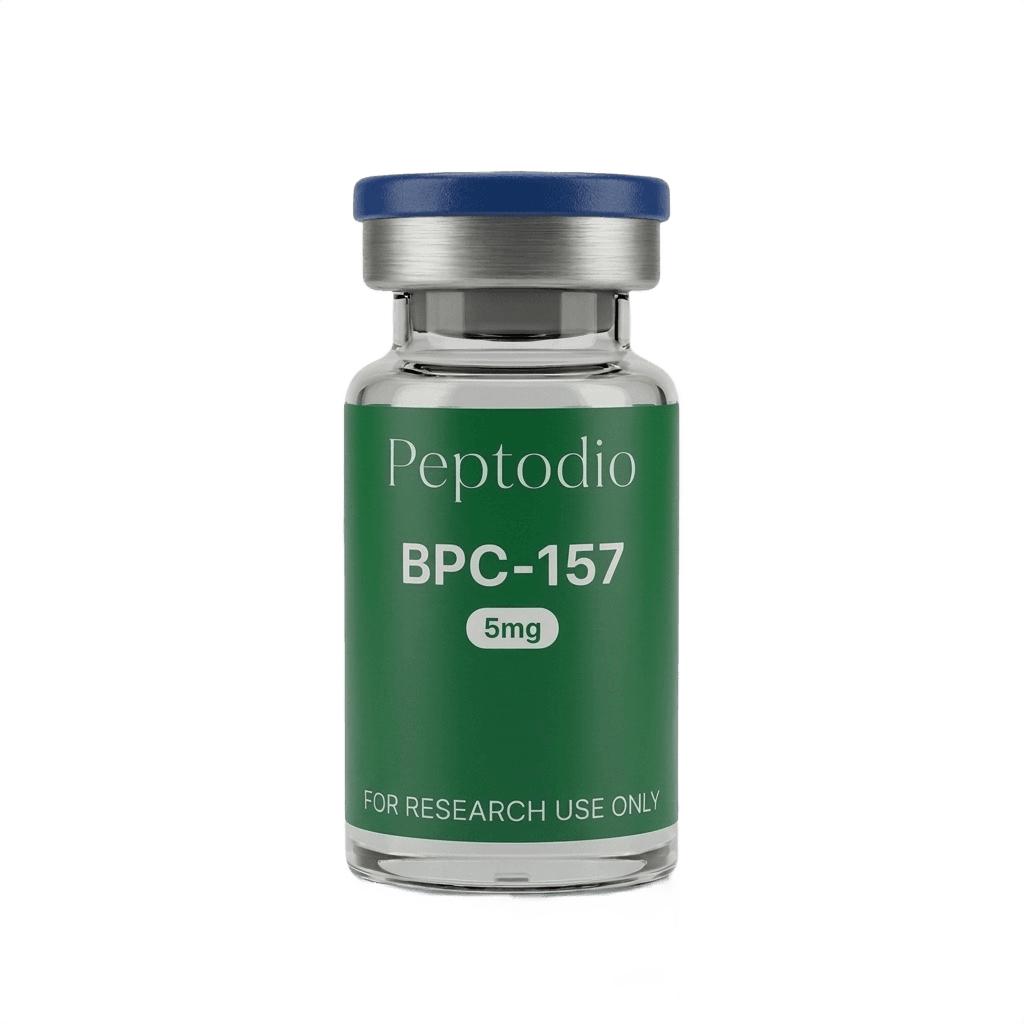
Storage Essentials
Common Questions
Can I store peptides in a mini-fridge?
Yes, as long as it maintains proper temperature (2-8°C). Some mini-fridges run warmer than full-size units - verify with a thermometer.
Do peptides need to be stored upright?
Not critical for lyophilized powder. For reconstituted solutions, upright is slightly better to keep the rubber stopper dry, but it's not a big deal.
Can I travel with peptides?
For short trips, a small cooler with ice packs works. Keep reconstituted vials cold. Lyophilized powder is more forgiving for a day or two at room temp.
What about power outages?
A closed freezer stays cold for 24-48 hours. A closed fridge stays cold for about 4 hours. If you lose power, don't open the doors unnecessarily.
The Bottom Line
Your peptides aren't as fragile as some people make them sound, but they're not indestructible either. Simple precautions go a long way.
For more details on specific peptides and handling protocols, check our [storage guide](/blog/peptide-storage-guide-fridge-freezer-shelf), reconstitution guide, and [calculator](/calculator).
Disclaimer: This article is for informational purposes only. Peptides are sold for research purposes and are not intended for human consumption.