

The Question We Keep Getting
Every week, someone in their early-to-mid 20s asks us some version of this: "I'm training seriously, eating right, and looking for an edge. Is CJC-1295 + Ipamorelin worth it for me?"
It's a fair question. You see the research on growth hormone secretagogues, hear about improved recovery and sleep quality, and think - why not get ahead of the curve?
Here's the honest answer: it depends. And for many younger lifters, the answer might not be what you want to hear.
Understanding Your Natural GH Production
Here's the thing about being in your early 20s - your body is already doing most of what CJC-1295 + Ipamorelin is designed to stimulate.
Peak GH production by age:
When you're 22 or 23, your pituitary gland is pumping out growth hormone at or near its lifetime maximum - especially if you're training hard and sleeping well. The secretagogue stack is essentially asking your body to do more of something it's already doing efficiently.
Compare that to someone in their late 30s or 40s whose natural production has meaningfully declined. For them, the same stack represents a much bigger relative boost.
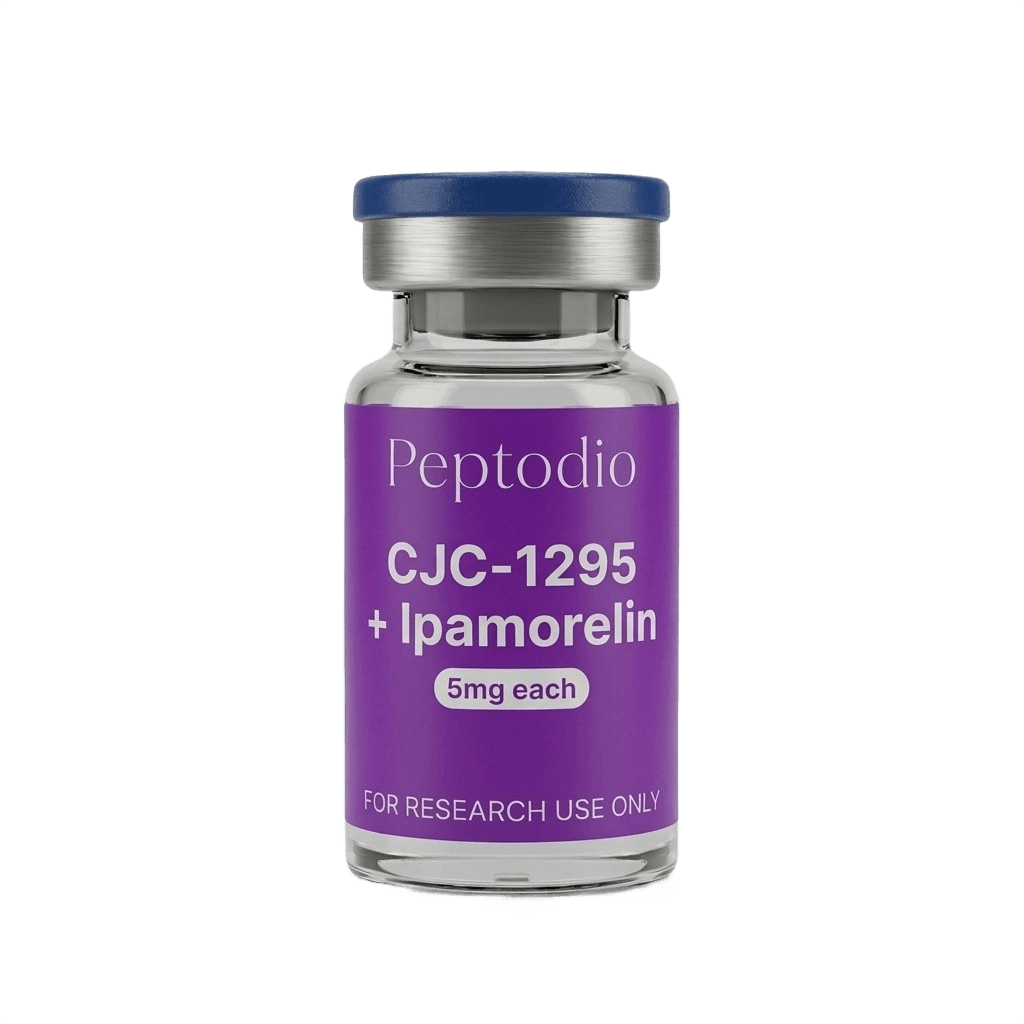
What CJC-1295 + Ipamorelin Actually Does
Let's be clear about the mechanism. This isn't synthetic growth hormone - it's a combination that signals your pituitary to release more of its own GH:
CJC-1295 (GHRH analog):
Ipamorelin (GHRP):
Together, they create a synergistic effect - Ipamorelin initiates the pulse, CJC-1295 amplifies and extends it. It's a well-designed stack, no question.
But here's the key insight: the stack works by optimizing a system. If that system is already running at 95% capacity (as it often is in your early 20s), there's less room for optimization than if it's running at 60-70% (more common in your late 30s+).
The Real Benefits People Report
To be fair, even younger users do report benefits. The most consistent ones:
Sleep Quality (Most Commonly Reported)
This is where younger users tend to notice something. Deeper sleep, more vivid dreams, waking up more refreshed. GH release is heavily tied to sleep cycles, and some people notice improvements regardless of age. We covered this in depth in our Ipamorelin sleep quality article.
Recovery Between Sessions
Some users report feeling less beat up between training sessions. Less residual soreness, faster bounce-back. Though this is harder to separate from placebo, sleep improvements, or just normal training adaptation.
Body Composition (Mixed Results)
Here's where it gets murky for younger users. The studies showing meaningful body composition changes typically involve:
For a 23-year-old already optimizing training and nutrition, the marginal body comp benefit is likely small - if measurable at all.
When It Probably Doesn't Make Sense
Based on both research and real-world feedback, CJC-1295 + Ipamorelin is likely not the best investment if:
You're under 25 with no sleep issues
Your natural GH is probably doing just fine. The cost-to-benefit ratio isn't favorable.
You're already on other compounds covering similar ground
If you're running something like Retatrutide (which affects metabolic pathways) or other peptides addressing recovery, there's diminishing returns from stacking growth hormone secretagogues on top.
You haven't maxed out the basics
Sleep, nutrition, training consistency, stress management. If any of these are suboptimal, fixing them will yield far better results than adding peptides. A 23-year-old sleeping 6 hours a night will get more from fixing that than from any GH secretagogue.
Budget is a constraint
If you're choosing between this stack and higher quality food, more protein, or even creatine - the basics win every time for younger lifters.
When It Might Make Sense (Even Young)
Enjoying this article?
Subscribe to get notified when we publish new experiment reports and research findings.
No spam, unsubscribe anytime.
That said, there are scenarios where younger users might reasonably consider it:
Legitimate sleep issues
If you struggle with sleep quality despite good sleep hygiene, the GH pulse timing from this stack can help regulate sleep architecture. Some people in their 20s do have suboptimal sleep patterns. Check out our guide on peptides for sleep for more options.
Recovery-demanding training
High-level athletes training twice daily, or people in physically demanding jobs who also train hard, might benefit from enhanced recovery even with naturally high GH.
You've genuinely optimized everything else
If you're a few years into serious training, nutrition is dialed in, sleep is 8+ hours of quality rest, stress is managed - and you just want to experiment - that's a valid choice. Just go in with realistic expectations.
The Opportunity Cost Angle
Here's something worth considering: what else could that money do for your results?
The CJC-1295 + Ipamorelin stack runs roughly $55-60 per kit. Running it for 3 months at typical dosing (use our dosage calculator to plan this out) costs around $150-200 depending on protocol.
For a 23-year-old, that same money could buy:
Not saying the peptide stack is bad - it's not. But when your natural GH is high, these alternatives often provide more bang for the buck.
What the Research Community Says
If you spend time in peptide communities, you'll notice a pattern in the discussions about younger users and GH secretagogues:
Most experienced voices suggest waiting until late 20s or 30s, when the benefits become more noticeable. That's not gatekeeping - it's practical advice based on collective experience.
The users who report the most dramatic benefits from CJC-1295 + Ipamorelin tend to be:
Younger users who try it often report "I think I'm sleeping better, maybe recovering faster?" - the kind of uncertain, marginal results that make you question whether it's the peptide or just paying more attention to your body.
Our Honest Take
If you're in your early 20s asking whether CJC-1295 + Ipamorelin is worth it:
Probably not yet. Your natural GH production is likely doing the heavy lifting already. Focus on training, nutrition, sleep, and consistency. These boring basics will drive 90%+ of your results at your age.
Check back in 5-10 years. As natural production declines, the relative benefit of secretagogues increases. Many people find their late 20s or 30s to be the sweet spot where the cost-benefit equation shifts.
If you try it anyway, go in with realistic expectations. You're unlikely to see dramatic changes. Sleep quality improvements are the most likely noticeable effect. Run it for at least 3 months before drawing conclusions.
Growth Hormone Peptides
What About Other Peptides?
If recovery and performance are the goals, younger users often get more noticeable benefits from:
BPC-157 - For specific injury recovery or gut health issues. Works differently than GH pathways and provides more targeted benefits.
[TB-500](/product/bpc-tb-stack) - Similar story - systemic healing support that doesn't depend on your baseline GH levels.
These work through different mechanisms and don't rely on amplifying a system that's already at peak function.
For sleep specifically, some find DSIP more directly effective than GH secretagogues, especially for resetting sleep patterns.
The Bottom Line
CJC-1295 + Ipamorelin is a legitimate, well-researched stack. It works. The question is whether it works *enough* for you specifically to justify the investment.
At 23, with natural GH production at or near peak, the honest answer for most people is: probably not yet. You'll likely get more from optimizing the fundamentals.
At 33? Different story. That's when many people find this stack becomes a genuinely valuable tool.
There's nothing wrong with being interested in optimization. Just make sure you're optimizing the right things at the right time. Sometimes the smartest move is patience.
Got experience with GH secretagogues at different ages? We're always interested in real data points. Reach out through the [contact page](/contact).
Disclaimer: This article is for informational purposes only. Peptides are sold for research purposes. Consult with healthcare professionals regarding any health decisions.