

What is Epithalon?
Epithalon (also spelled Epitalon) is a synthetic tetrapeptide with the sequence Ala-Glu-Asp-Gly (AEDG). Developed by Russian scientist Professor Vladimir Khavinson at the St. Petersburg Institute of Bioregulation and Gerontology, Epithalon is based on epithalamin—a peptide extract from the pineal gland.
Epithalon has been studied primarily for its potential effects on telomerase activity, the enzyme responsible for maintaining telomere length. As telomere shortening is associated with cellular aging, Epithalon has become a focus of longevity and anti-aging research.
Understanding Telomeres and Telomerase
What Are Telomeres?
Telomeres are protective caps at the ends of chromosomes:
Structure:
Function:
Telomere Shortening
With each cell division:
Hayflick Limit:
Telomerase Enzyme
Telomerase counteracts shortening:
Components:
Activity:
Epithalon's Proposed Mechanism
Telomerase Activation
Research suggests Epithalon may:
Pineal Gland Connection
Epithalon was derived from epithalamin (pineal extract):
Pineal Functions:
Research Suggests:
Peptide Profile
| Property | Details |
|---|---|
| Full Name | Epithalon / Epitalon |
| Sequence | Ala-Glu-Asp-Gly (AEDG) |
| Amino Acids | 4 (tetrapeptide) |
| Molecular Weight | 390.35 g/mol |
| Purity | 99%+ (HPLC verified) |
| Form | Lyophilized powder |
| Solubility | Water, saline |
| Stability | Good (small peptide) |
Research Applications
Telomere Studies
Telomerase Research:
Cellular Aging:
Longevity Research
Animal Studies:
Khavinson Research:
Circadian/Pineal Research
Melatonin Studies:
Research Findings
Key Studies
Khavinson et al. (2003):
Animal Longevity Studies:
Proposed Benefits (Research)
Cellular Level:
Enjoying this article?
Subscribe to get notified when we publish new experiment reports and research findings.
No spam, unsubscribe anytime.
Systemic Level (Animal Studies):
Dosage Protocols in Research
Reconstitution
Epithalon dissolves readily due to small size:
| Vial Size | Bacteriostatic Water | Concentration |
|---|---|---|
| 10mg | 2ml | 5mg/ml |
| 20mg | 4ml | 5mg/ml |
Procedure:
Use our peptide calculator for precise measurements.
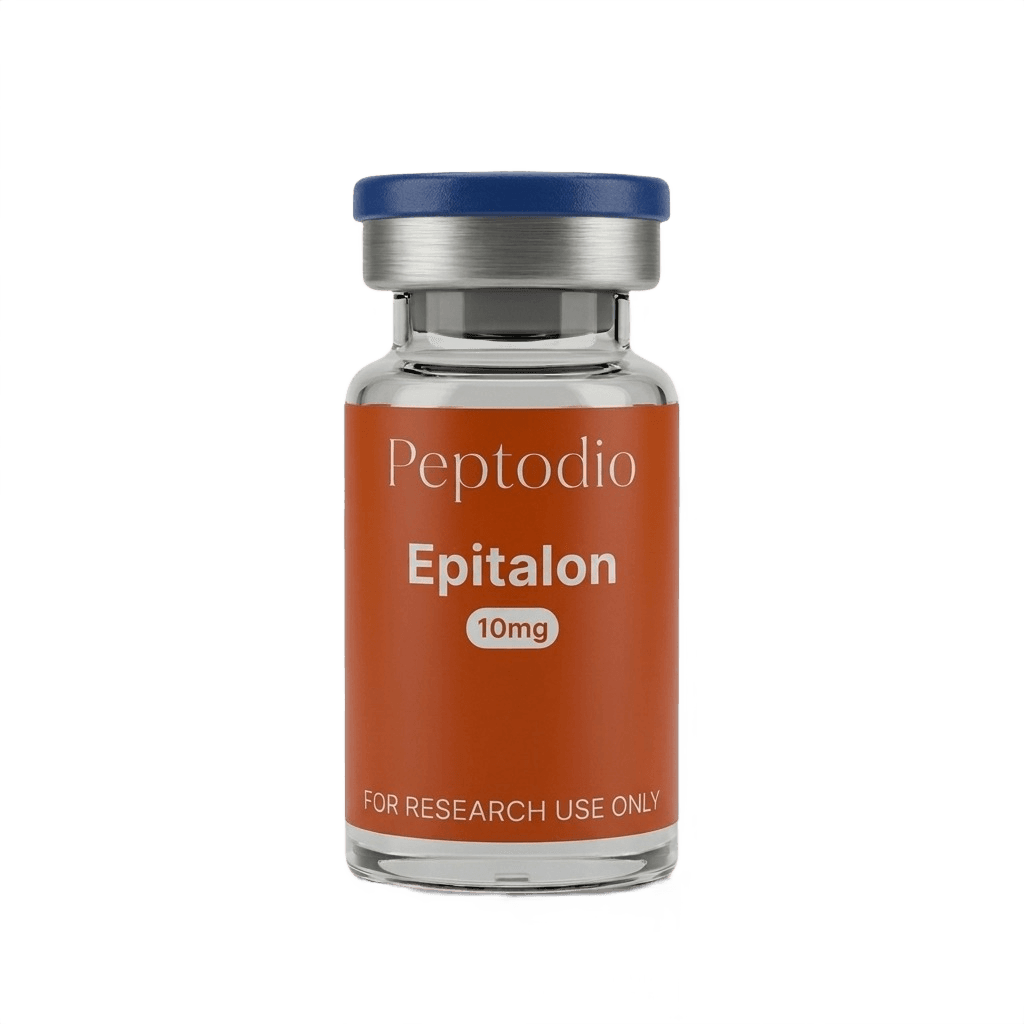
Epithalon
10mg • 99%+ Purity
Research Protocols
Typical Study Designs:
Literature Dosing:
Specific protocols should follow institutional guidelines.
Storage Guidelines
Lyophilized Form
Reconstituted Solution
Small peptides like Epithalon are generally more stable than larger peptides.
See our storage guide.
Epithalon vs Other Longevity Compounds
Comparison
| Compound | Mechanism | Target |
|---|---|---|
| Epithalon | Telomerase activation | Telomeres |
| Resveratrol | Sirtuin activation | Multiple |
| Rapamycin | mTOR inhibition | Autophagy |
| NAD+ precursors | NAD+ restoration | Metabolism |
| Metformin | AMPK activation | Multiple |
Unique Aspects
Epithalon:
Safety Profile
Research Observations
Animal Studies:
Human Studies (Limited):
Considerations
Frequently Asked Questions
What is the relationship between Epithalon and telomerase?
Epithalon is studied for its potential to activate telomerase, specifically by increasing expression of hTERT (the catalytic subunit). Research suggests this may allow cells to maintain or extend telomere length, potentially extending cellular replicative capacity.
Is Epithalon the same as epithalamin?
Epithalon is a synthetic tetrapeptide (AEDG) based on the active component identified in epithalamin, which is a peptide extract from pineal glands. Epithalon is the purified, synthesized version with a defined sequence.
How is Epithalon typically administered in research?
Subcutaneous injection is most common in research settings. Studies often use cycling protocols (e.g., 10-20 day cycles with rest periods). Dosing varies by study design and model organism.
Does Epithalon affect melatonin?
Research suggests possible effects on pineal function and melatonin production, given Epithalon's origin from pineal extracts. Some studies report improved circadian function and melatonin levels, though mechanisms are still being studied.
Could telomerase activation cause cancer?
This is a theoretical concern since cancer cells often have active telomerase. However, research has not shown carcinogenic effects with Epithalon. The distinction may be that Epithalon supports normal telomerase function rather than abnormal activation. Long-term studies continue.
How long do Epithalon cycles typically last?
Research protocols commonly use 10-20 day cycles with rest periods between. Some studies use longer continuous protocols. Cycling approaches may relate to receptor sensitivity and physiological response patterns.
Related Resources
Conclusion
Epithalon represents a unique approach to longevity research through direct telomerase targeting. With decades of research primarily from Russian institutions, it has accumulated substantial data on telomere biology, cellular aging, and potential longevity effects.
For researchers studying telomere dynamics, cellular senescence, or aging biology, Epithalon provides a well-characterized tool with a defined mechanism targeting one of biology's most fundamental aging processes.
Explore our Epithalon products to begin your research.
Anti-Aging Research Peptides
View All
This article is for informational purposes only. Epithalon is sold for research purposes and is not intended for human consumption. All research should be conducted in accordance with applicable regulations.