

What is Melanotan 2?
Melanotan 2 (MT2) is a synthetic analog of alpha-melanocyte stimulating hormone (α-MSH), developed at the University of Arizona in the 1990s. This cyclic heptapeptide was designed to activate melanocortin receptors, particularly MC1R, which plays a central role in melanogenesis—the production of melanin pigment in the skin.
As a research peptide, MT2 has been studied extensively for its effects on pigmentation, as well as its activity at other melanocortin receptor subtypes including MC3R, MC4R, and MC5R.
The Science Behind Melanotan 2
Melanocortin System Overview
The melanocortin system is a complex network of peptides and receptors involved in numerous physiological processes:
Five Melanocortin Receptors (MC1R-MC5R)
MT2 is a non-selective agonist, meaning it activates multiple melanocortin receptor subtypes with varying affinities.
Mechanism of Action
MC1R Activation (Pigmentation)
When MT2 binds to MC1R on melanocytes:
This cascade results in increased melanin production, leading to skin darkening independent of UV exposure—though UV exposure can enhance effects.
Peptide Structure
| Property | Details |
|---|---|
| Sequence | Ac-Nle-cyclo[Asp-His-D-Phe-Arg-Trp-Lys]-NH2 |
| Molecular Weight | 1024.2 g/mol |
| Type | Cyclic heptapeptide |
| Purity | 99%+ (HPLC verified) |
| Form | Lyophilized powder |
The cyclic structure of MT2 provides enhanced stability compared to linear peptides, contributing to its longer duration of action.
Development History
University of Arizona Research
MT2 was developed by Dr. Victor Hruby and colleagues at the University of Arizona during research aimed at creating a photoprotective agent:
Timeline:
The researchers sought to create compounds that could induce tanning without UV exposure, potentially reducing skin damage and associated risks.
From MT1 to MT2
Melanotan 1 (afamelanotide) is a linear analog of α-MSH, while MT2 is cyclic:
| Feature | MT1 (Afamelanotide) | MT2 |
|---|---|---|
| Structure | Linear | Cyclic |
| Receptor Selectivity | More MC1R selective | Non-selective |
| Half-life | ~30 minutes | ~33 minutes |
| Regulatory Status | Approved (EPP) | Research only |
| MC4R Activity | Minimal | Significant |
MT2's non-selectivity means it activates MC4R, which is associated with effects beyond pigmentation.
Research Applications
Pigmentation Studies
MT2's primary research application involves understanding melanogenesis:
MC4R-Related Research
Due to MT2's activity at MC4R, researchers have studied:
Comparative Pharmacology
MT2 serves as a reference compound for:
Dosage Protocols in Research
Reconstitution
MT2 is typically supplied as a lyophilized powder requiring reconstitution:
Standard Protocol:
| Vial Size | Bacteriostatic Water | Concentration |
|---|---|---|
| 10mg | 2ml | 5mg/ml (5000mcg/ml) |
| 10mg | 1ml | 10mg/ml (10000mcg/ml) |
Procedure:
Use our peptide calculator for precise measurements.
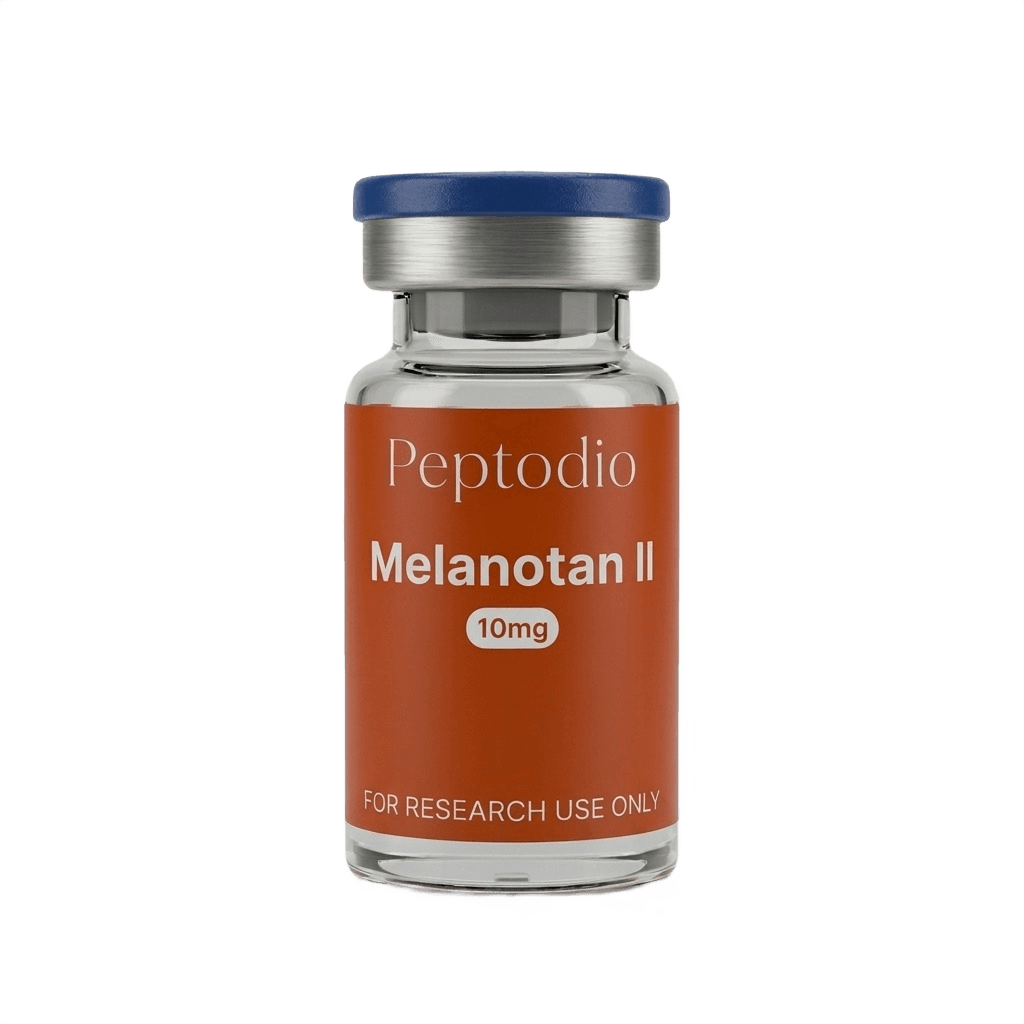
Melanotan II
10mg • 99%+ Purity
Research Dosing Ranges
Published research has examined various dosing approaches:
Initial/Loading Phase (Literature)
Enjoying this article?
Subscribe to get notified when we publish new experiment reports and research findings.
No spam, unsubscribe anytime.
Maintenance Phase (Literature)
Note: Specific dosing should be determined based on individual research protocols and institutional guidelines.
Storage Guidelines
Lyophilized Form
Reconstituted Solution
For detailed storage protocols, see our storage guide.
Safety Research
Documented Effects in Studies
Research has identified various effects associated with MT2 administration:
Common Observations:
Pigmentation Effects:
Research Considerations
Important factors for researchers:
MT2 vs Related Compounds
Comparison with PT-141
PT-141 (bremelanotide) was derived from MT2 research:
| Feature | MT2 | PT-141 |
|---|---|---|
| Pigmentation | Yes | Minimal |
| MC4R Activity | Yes | Yes |
| FDA Status | Research only | Approved (HSDD) |
| Administration | Subcutaneous | Subcutaneous |
| Primary Research Use | Pigmentation | Sexual function |
PT-141 was specifically developed to isolate MC4R effects while minimizing pigmentation.
Comparison with Afamelanotide (MT1)
| Feature | MT2 | MT1 (Afamelanotide) |
|---|---|---|
| Structure | Cyclic | Linear |
| MC1R Selectivity | Non-selective | More selective |
| Approved Indication | None | Erythropoietic Protoporphyria |
| Administration | Subcutaneous | Implant |
Working with MT2 in Research
Quality Considerations
When selecting MT2 for research:
Equipment Needed
Browse our peptide database.
Frequently Asked Questions
What is the difference between Melanotan 1 and Melanotan 2?
MT1 (afamelanotide) is a linear peptide with greater MC1R selectivity, now approved for erythropoietic protoporphyria. MT2 is a cyclic peptide with non-selective melanocortin activity, affecting MC1R, MC3R, MC4R, and MC5R. MT2's MC4R activity produces effects beyond pigmentation.
How should MT2 be stored?
Lyophilized MT2 should be stored at -20°C for maximum stability (2+ years) or at 2-8°C for shorter periods. Once reconstituted with bacteriostatic water, store at 2-8°C and use within 4-6 weeks. Always protect from light.
Does MT2 require UV exposure to work?
MT2 can induce melanogenesis independent of UV exposure by directly activating melanocyte MC1R receptors. However, research indicates that UV exposure can enhance and accelerate pigmentation effects. The interaction between MT2 and UV is an active area of study.
What is the purity requirement for research-grade MT2?
Research-grade MT2 should have ≥98% purity, verified by HPLC analysis. Higher purity (≥99%) is preferred for quantitative research to ensure accurate dosing and minimize interference from synthesis impurities.
How is MT2 related to PT-141?
PT-141 (bremelanotide) was developed from MT2 research. Researchers sought to isolate MC4R effects while minimizing pigmentation. PT-141 retains MC4R activity but has significantly reduced MC1R activity, making it more specific for its approved indication.
Conclusion
Melanotan 2 remains an important research tool for studying the melanocortin system, pigmentation biology, and related physiological pathways. Its non-selective receptor activity provides insights into multiple melanocortin-mediated processes, while its development history illustrates the progression from basic research to therapeutic applications.
Researchers interested in MT2 should ensure proper handling, storage, and documentation while staying current with published literature on melanocortin research.
Use our peptide calculator for accurate reconstitution.
Related Melanocortin Peptides
View All
This article is for informational purposes only. Melanotan 2 is sold for research purposes and is not intended for human consumption. All research should be conducted in accordance with applicable regulations.