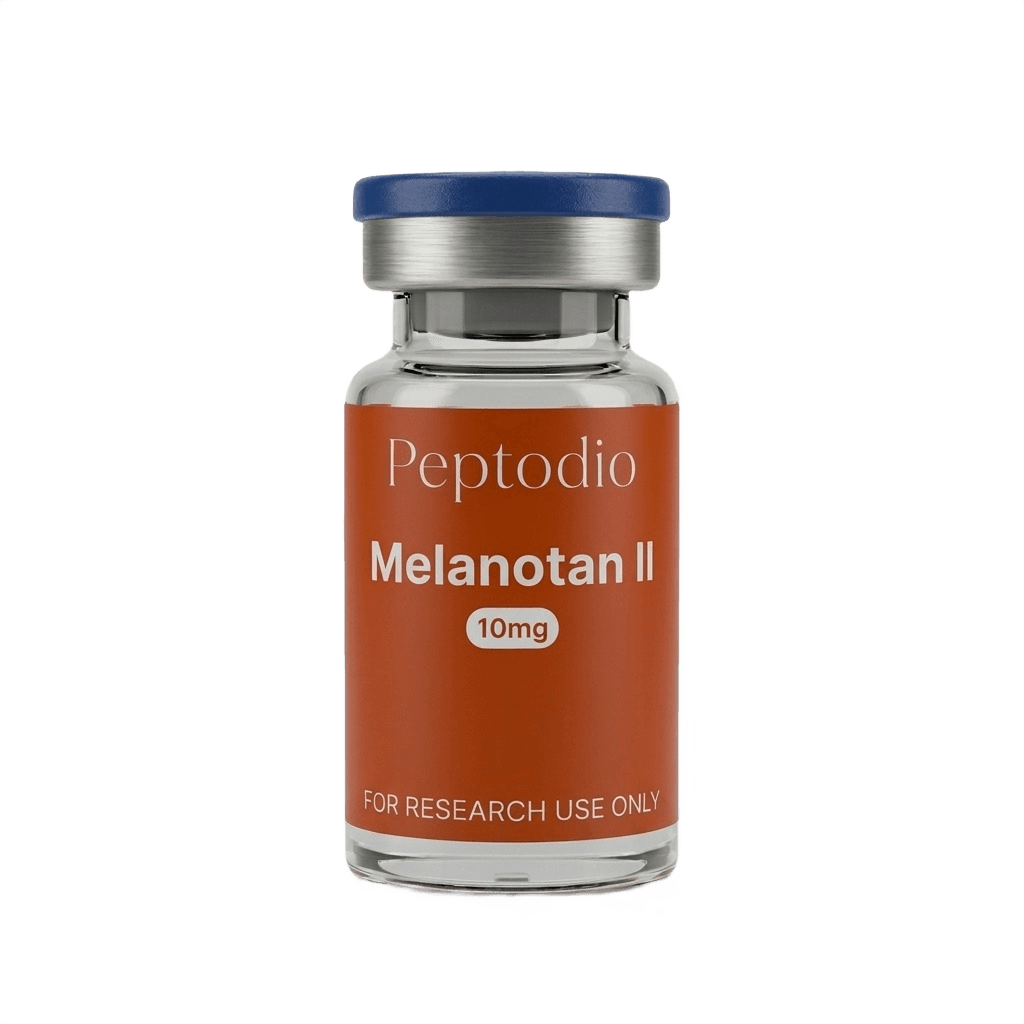
Melanotan II
10mg · 99%+ Purity
Description
Melanotan II is a synthetic melanocortin receptor agonist investigated for its effects on melanogenesis and photoprotection pathways. Studies often explore its potential in understanding skin pigmentation and UV radiation response mechanisms.
Disclaimer: The images on this page are for illustrative purposes only. Peptodio is an educational resource and does not sell any products, nor will we ever. We do not recommend or endorse any sellers or vendors. This information is provided for research and educational purposes only.
Research & Science
Evidence-based information about this compound
Chemical Properties
CAS Number
121062-08-6
Molecular Formula
C50H69N15O9
Molecular Weight
1024.18 g/mol
Amino Acid Sequence
Ac-Nle-cyclo[Asp-His-D-Phe-Arg-Trp-Lys]-NH2
Also known as:
Melanotan 2, MT-II, MT2
Melanotan II (MT-II) is a synthetic cyclic heptapeptide analog of α-melanocyte-stimulating hormone (α-MSH). Developed at the University of Arizona, it was designed to stimulate melanogenesis (tanning) and has been studied for various other physiological effects.
The peptide activates melanocortin receptors, particularly MC1R and MC4R, which are involved in pigmentation, sexual function, appetite regulation, and other processes. Its cyclic structure provides enhanced stability and receptor binding compared to linear analogs.
MT-II has been the subject of numerous studies examining its effects on skin pigmentation, sexual function, and other melanocortin-mediated processes.
Melanotan II exerts its effects through melanocortin receptor activation:
- MC1R Activation: Stimulates melanocytes to produce melanin, resulting in skin darkening.
- MC4R Activation: Affects sexual function and appetite through central nervous system pathways.
- Melanogenesis: Triggers the production and distribution of melanin pigment.
- Central Effects: Crosses into the CNS where it affects various hypothalamic functions.
- Appetite Modulation: MC4R activation may influence food intake and energy balance.
MT-II's effects on skin pigmentation have been extensively studied:
- Melanin Production: Strongly stimulates melanin synthesis in melanocytes.
- UV-Independent: Produces tanning without UV exposure requirement.
- Protective Potential: Increased melanin may provide enhanced protection against UV damage.
- Duration: Effects persist after cessation of treatment.
These pigmentation effects have made MT-II valuable for dermatological research.
This information is provided for educational purposes only and is based on published scientific research. This product is intended for research use only.