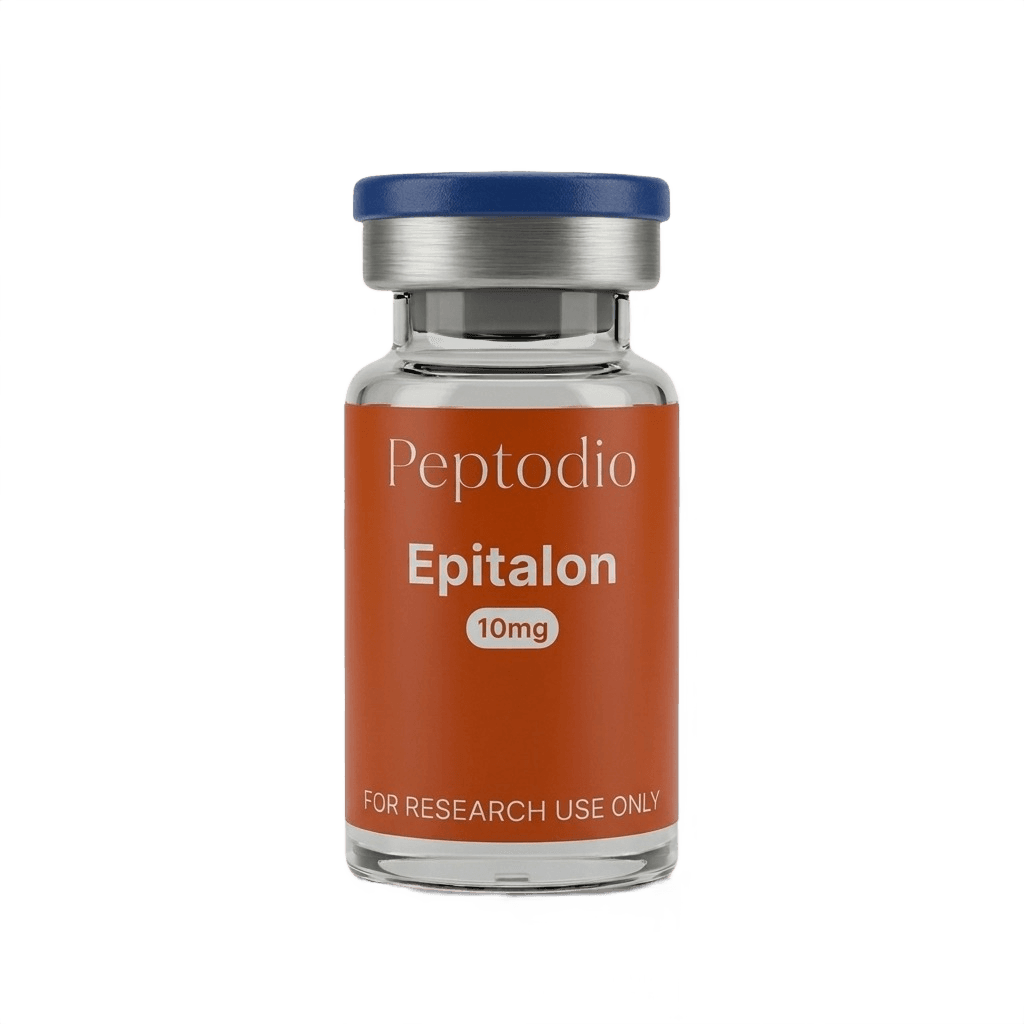
Epithalon
10mg · 99%+ Purity
Description
SLU-PP-332 is a research peptide investigated for its interactions with Estrogen-Related Receptors (ERRs). Studies suggest SLU-PP-332 may influence energy metabolism and mitochondrial function pathways. Available in 25mg dosages with high purity for reliable *in vitro* and *in vivo* experiments.
Disclaimer: The images on this page are for illustrative purposes only. Peptodio is an educational resource and does not sell any products, nor will we ever. We do not recommend or endorse any sellers or vendors. This information is provided for research and educational purposes only.
Research & Science
Evidence-based information about this compound
Chemical Properties
CAS Number
307297-39-8
Molecular Formula
C14H22N4O9
Molecular Weight
390.35 g/mol
Amino Acid Sequence
Ala-Glu-Asp-Gly
Also known as:
Epitalon, Epithalamin, AEDG Peptide
Epithalon (also spelled Epitalon) is a synthetic tetrapeptide consisting of four amino acids (Ala-Glu-Asp-Gly) that was developed based on research into the pineal gland peptide epithalamin. It was discovered by Professor Vladimir Khavinson at the St. Petersburg Institute of Bioregulation and Gerontology in Russia.
The peptide has been studied primarily for its effects on telomerase activation and its potential role in cellular aging processes. Telomerase is the enzyme responsible for maintaining telomere length, and its activity is associated with cellular longevity and regenerative capacity.
Epithalon represents one of the most researched compounds in the field of biogerontology and anti-aging peptide research.
Epithalon's mechanisms involve several pathways related to cellular aging:
- Telomerase Activation: Research indicates Epithalon activates telomerase, the enzyme that maintains telomere length during cell division.
- Telomere Protection: By activating telomerase, the peptide may help protect telomeres from shortening with each cell division.
- Pineal Function: Studies suggest effects on pineal gland function and melatonin production.
- Circadian Rhythm: May influence circadian rhythm regulation through pineal effects.
- Antioxidant Effects: Research indicates antioxidant properties that may protect against oxidative damage.
Epithalon's effects on telomerase and telomeres have been extensively studied:
- Telomerase Activation: Research shows Epithalon can activate telomerase in human somatic cells.
- Telomere Lengthening: Studies indicate the peptide may help maintain or increase telomere length.
- Cell Lifespan: Research suggests effects on extending the proliferative potential of cells.
- Hayflick Limit: Some studies indicate Epithalon may help cells divide beyond normal limits.
These findings have significant implications for understanding cellular aging and regenerative capacity.
Research has documented Epithalon's effects on pineal function:
- Melatonin Production: Studies show Epithalon may restore or enhance melatonin production.
- Pineal Function: Research indicates effects on overall pineal gland function in aging.
- Circadian Rhythm: May help normalize circadian rhythm disruptions associated with aging.
- Sleep Quality: Some research suggests improvements in sleep parameters.
The pineal gland's role in aging makes these effects particularly relevant to gerontological research.
Sources:
This information is provided for educational purposes only and is based on published scientific research. This product is intended for research use only.