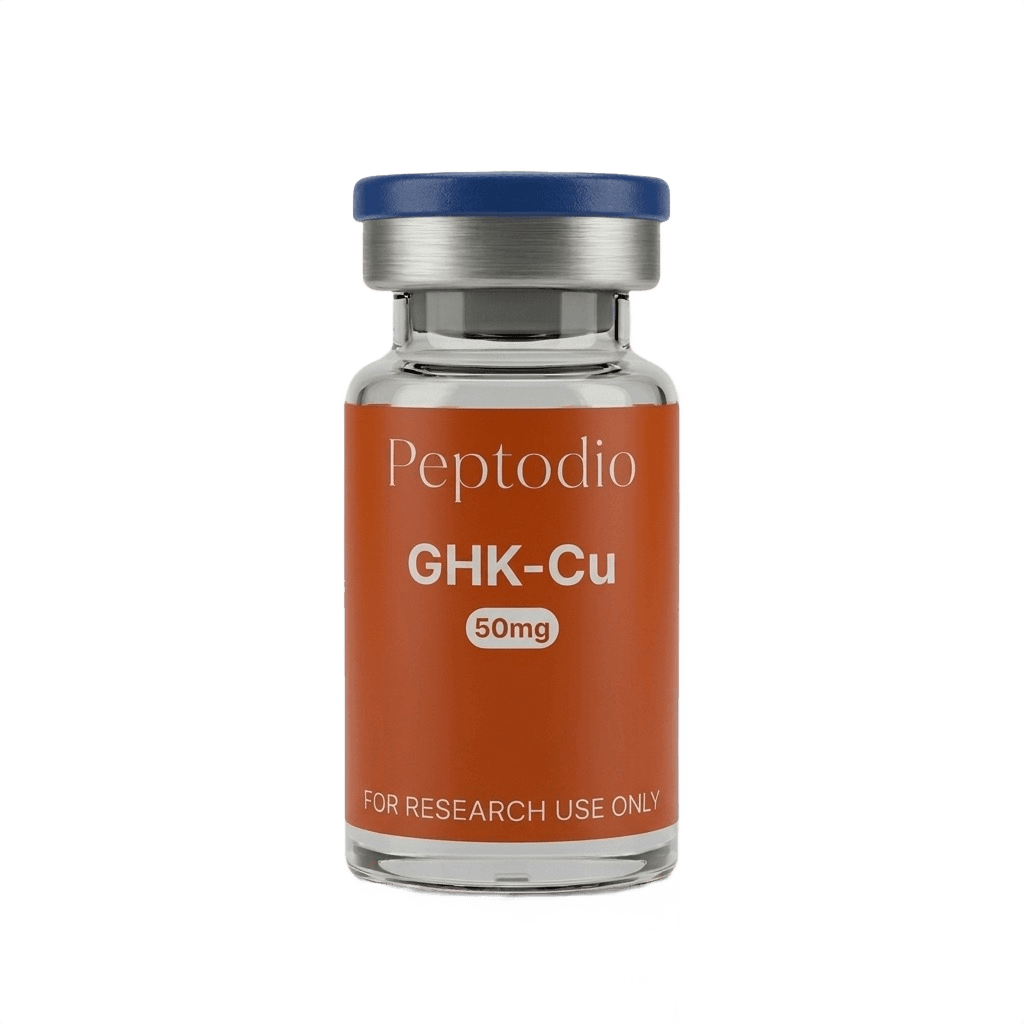
GHK-Cu
50mg · 99%+ Purity
Description
Buy GHK-Cu copper peptide 50mg at 99%+ purity. Researched for collagen synthesis, skin regeneration, and wound healing.
Disclaimer: The images on this page are for illustrative purposes only. Peptodio is an educational resource and does not sell any products, nor will we ever. We do not recommend or endorse any sellers or vendors. This information is provided for research and educational purposes only.
Research & Science
Evidence-based information about this compound
Chemical Properties
CAS Number
49557-75-7
Molecular Formula
C14H23CuN6O4
Molecular Weight
403.92 g/mol
Amino Acid Sequence
Gly-His-Lys-Cu
Also known as:
Copper Peptide, Lipo Copper, Prezatide Copper
GHK-Cu (Glycyl-L-Histidyl-L-Lysine Copper) is a naturally occurring copper-binding tripeptide found in human plasma, saliva, and urine. First isolated from human plasma in 1973, GHK-Cu has been extensively studied for its wide-ranging biological activities.
The peptide consists of three amino acids (glycine-histidine-lysine) with a strong affinity for copper(II) ions. This copper complex is essential for many of GHK-Cu's biological activities. Plasma levels of GHK-Cu decline significantly with age, from about 200 ng/mL at age 20 to 80 ng/mL by age 60.
Research has documented GHK-Cu's effects on wound healing, skin health, anti-inflammatory processes, and even gene expression modulation affecting numerous biological pathways.
GHK-Cu exerts its effects through multiple mechanisms:
- Copper Delivery: Acts as a copper transport molecule, delivering this essential trace element to tissues where it's needed for various enzymatic processes.
- Gene Expression: Research has shown GHK-Cu affects the expression of numerous genes involved in tissue remodeling, antioxidant defense, and inflammation.
- Collagen Synthesis: Stimulates collagen production and the synthesis of other extracellular matrix components.
- Anti-Inflammatory: Modulates inflammatory responses and reduces the expression of pro-inflammatory cytokines.
- Antioxidant: Enhances antioxidant defense mechanisms and reduces oxidative damage.
- Growth Factor Modulation: Affects the production and activity of various growth factors involved in tissue repair.
GHK-Cu has been extensively researched for its effects on skin health and aging:
- Collagen Production: Studies show GHK-Cu stimulates collagen types I, III, and IV production in skin fibroblasts.
- Elastin Synthesis: Research indicates increased elastin production, contributing to skin elasticity.
- Wound Healing: Clinical studies demonstrate accelerated wound healing and improved scar appearance.
- Skin Remodeling: Evidence suggests GHK-Cu promotes healthy extracellular matrix remodeling.
- Antioxidant Effects: Provides protection against oxidative damage associated with aging.
These effects have made GHK-Cu popular in both research and cosmetic applications.
Research has revealed GHK-Cu's remarkable effects on gene expression:
- Broad Modulation: Studies using gene array analysis show GHK-Cu affects the expression of over 4,000 genes.
- Regenerative Genes: Upregulates genes associated with tissue repair, stem cell function, and protein synthesis.
- Anti-Inflammatory: Suppresses expression of genes involved in chronic inflammation.
- Antioxidant Genes: Increases expression of antioxidant enzyme genes.
- DNA Repair: Research suggests effects on DNA repair pathway genes.
This broad influence on gene expression may explain GHK-Cu's diverse biological effects across multiple systems.
Sources:
This information is provided for educational purposes only and is based on published scientific research. This product is intended for research use only.