

The Peptide Buying Landscape Has Changed
If you've been researching peptides online lately, you've probably noticed the landscape has shifted dramatically. What was once a relatively straightforward process of finding a research supplier has become more complicated - and for good reason.
Whether you're in Texas, Florida, California, or any other US state, the rules around peptides have evolved. This guide breaks down what's actually happening, what's legal, and how to identify legitimate sources from the sketchy ones flooding forums with dubious claims.
Understanding FDA Peptide Categories
In 2024, the FDA finalized significant changes to how peptides are categorized for compounding purposes. This affects what you can and can't easily obtain through traditional pharmacy channels.
Category 1 Peptides (On the "Bulks List")
These can be compounded by registered 503A and 503B pharmacies under certain conditions:
Category 2 Peptides (Prohibited from Compounding)
These cannot be legally compounded by pharmacies:
Category 3 Peptides (Under Evaluation)
Still being reviewed - their status may change.
This categorization matters because it affects where and how you can legitimately obtain certain peptides. A Texas pharmacy can compound Category 1 peptides with a valid prescription, but cannot compound Category 2 peptides regardless of what state you're in.
State-by-State Considerations
While FDA rules apply nationally, some states have additional considerations:
Texas
Texas follows federal guidelines closely. The Texas State Board of Pharmacy regulates compounding pharmacies, and they must comply with FDA 503A/503B requirements. Researchers in Texas looking for Category 2 peptides need to source from research chemical suppliers.
Florida
Florida has been a hub for anti-aging and wellness clinics. The state has its own pharmacy board regulations, but federal rules on peptide categories still apply. Some clinics have had to adjust their offerings based on the new FDA categories.
California
California tends to have stricter regulations in many health-related areas. The California State Board of Pharmacy actively enforces compounding regulations. Research peptide sales are still permitted for legitimate research purposes.
New York
New York has historically been more restrictive about certain compounds. Similar to California, regulatory oversight tends to be thorough.
The bottom line: no matter which state you're in, Category 2 peptides like BPC-157 cannot be obtained through compounding pharmacies. The only legal avenue is research-use suppliers.
Research Peptides vs. Prescription Peptides
There's an important distinction most people miss:
Research Peptides
Prescription Peptides
For many popular peptides (BPC-157, TB-500, certain growth hormone secretagogues), the research route is currently the only option in the United States.
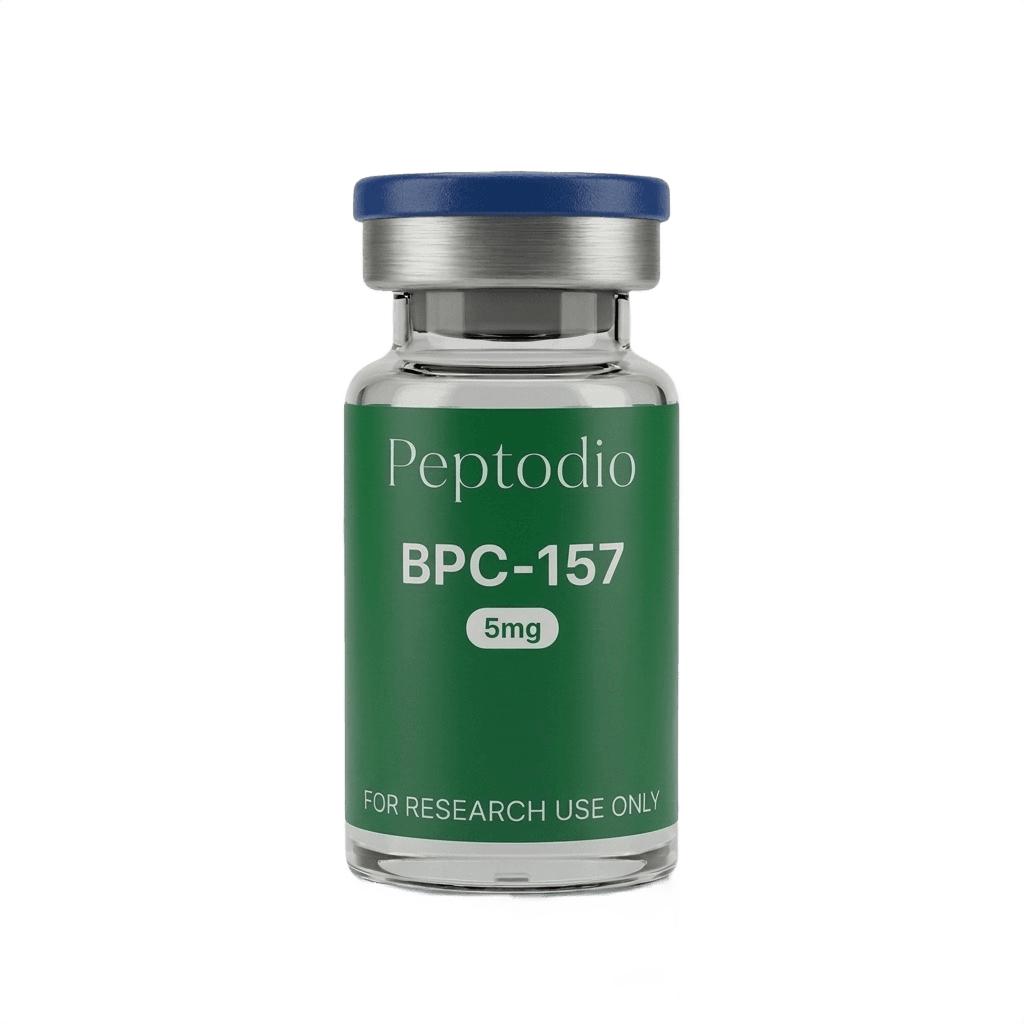
BPC-157
5mg • 99%+ Purity
How to Spot Legitimate Research Suppliers
This is where most people get lost. The research peptide market has legitimate suppliers and complete scams. Here's what separates them:
Green Flags - Signs of a Legitimate Supplier
Third-Party Testing
Legitimate suppliers provide Certificates of Analysis (CoA) from independent laboratories - not just their own in-house testing. Look for HPLC purity testing showing 98%+ purity. Our products come with HPLC testing verification.
Transparent Business Presence
Real companies have verifiable business addresses, customer service contact methods, and established online presence. They respond to inquiries. They have refund policies they actually honor.
Proper Peptide Handling
Quality matters. Legitimate suppliers ship lyophilized (freeze-dried) peptides with cold packs when needed. They use appropriate packaging that protects from light and temperature. Check out our peptide storage guide for what proper handling looks like.
Clear Labeling
Research peptides should be clearly labeled with the compound name, quantity, lot number, and research-use disclaimers. Sketchy suppliers often have vague or missing information.
Reasonable Pricing
Pricing that's dramatically lower than competitors is a red flag. Peptide synthesis has real costs. If someone is selling at 20% of market rate, the product is either impure, underdosed, or something else entirely.
Red Flags - Signs of a Sketchy Supplier
No Testing Documentation
If they can't or won't provide CoAs from third-party labs, walk away. "Trust us" isn't a quality control system.
Unrealistic Claims
Suppliers making medical claims, promising specific results, or using language like "pharmaceutical grade" for research peptides are often cutting corners elsewhere too.
Cryptocurrency Only
While some legitimate suppliers accept crypto, vendors that ONLY accept untraceable payment methods are often hiding something.
No Customer Service
If you can't reach anyone before the sale, good luck reaching them after.
Overseas Shipping Only
Products shipped from overseas (particularly China or India direct) may face customs issues and often lack quality verification.
Forum Spam
Suppliers that rely heavily on suspicious forum posts and affiliate marketing rather than legitimate reputation are usually worth avoiding.
Reconstitution and Handling
Once you've sourced quality peptides for research, proper handling is critical. Many people waste money by degrading their peptides through improper storage or reconstitution.
Key resources:
Peptides are proteins. They degrade with heat, light, and improper pH. A $50 vial can become worthless if reconstituted with the wrong solution or left at room temperature.
Enjoying this article?
Subscribe to get notified when we publish new experiment reports and research findings.
No spam, unsubscribe anytime.
The Gray Market Reality
Let's be direct: the research peptide market exists in a regulatory gray area. These compounds are legal to sell for research purposes, but the "research purposes" framing creates ambiguity.
What this means practically:
This gray area is why vendor reputation matters so much. Without regulatory oversight ensuring quality, you're relying on supplier integrity. Choose accordingly.
Questions to Ask Before Buying
When evaluating any peptide supplier, ask:
Use our peptide planner to research which compounds fit your needs before reaching out to suppliers.
What About Compounding Pharmacy Alternatives?
For Category 1 peptides, working with a legitimate compounding pharmacy through a licensed provider is an option worth considering:
Pros:
Cons:
For popular research peptides like BPC-157, this route isn't available - they're Category 2.
Common Beginner Mistakes
Based on community feedback and support inquiries, here are the mistakes we see most often:
Buying Based on Price Alone
The cheapest option is rarely the best value when quality is uncertain. Mid-market pricing from established suppliers typically offers the best balance.
Not Verifying CoAs
Many people never actually check the certificate of analysis. Some don't even know what to look for. Learn to read an HPLC report.
Improper Storage
Peptides arrive, get left on the counter for a day, then reconstituted incorrectly. Potency lost before research even begins.
No Research Protocol
Starting without a plan - dosing randomly, inconsistent timing, no documentation. If you're doing research, do it properly.
Trusting Forum Recommendations Blindly
Some forum recommendations are genuine. Many are affiliate-driven or outright shills. Verify independently.
Building a Research Protocol
If you're serious about peptide research, treat it seriously:
Popular Research Peptides
View All
The Regulatory Future
The peptide landscape will continue evolving. Some observations on where things may head:
Staying informed matters. Regulations that were accurate last year may have changed. We try to keep our FAQ and learning resources updated as things shift.
Finding Legitimate Sources Today
With all that context, what's the practical path forward for someone in Texas, Florida, California, or anywhere else in the US looking for quality research peptides?
Quality matters more than price. A 99% pure peptide at market rate beats a 70% pure peptide at half the cost.
Our Approach
At Peptodio, we focus on research-grade peptides with verified purity. Every batch includes third-party HPLC testing documentation. We ship with appropriate cold storage protection. Our support team actually responds to questions.
Browse our peptide database or use the peptide planner to find what fits your research goals.
This article is for informational purposes only. Peptides are sold for research purposes and are not intended for human consumption. Regulatory information is current as of publication but may change. Always verify current regulations before making purchasing decisions.
Have questions about sourcing or need help planning your research? Reach out through our [contact page](/contact).