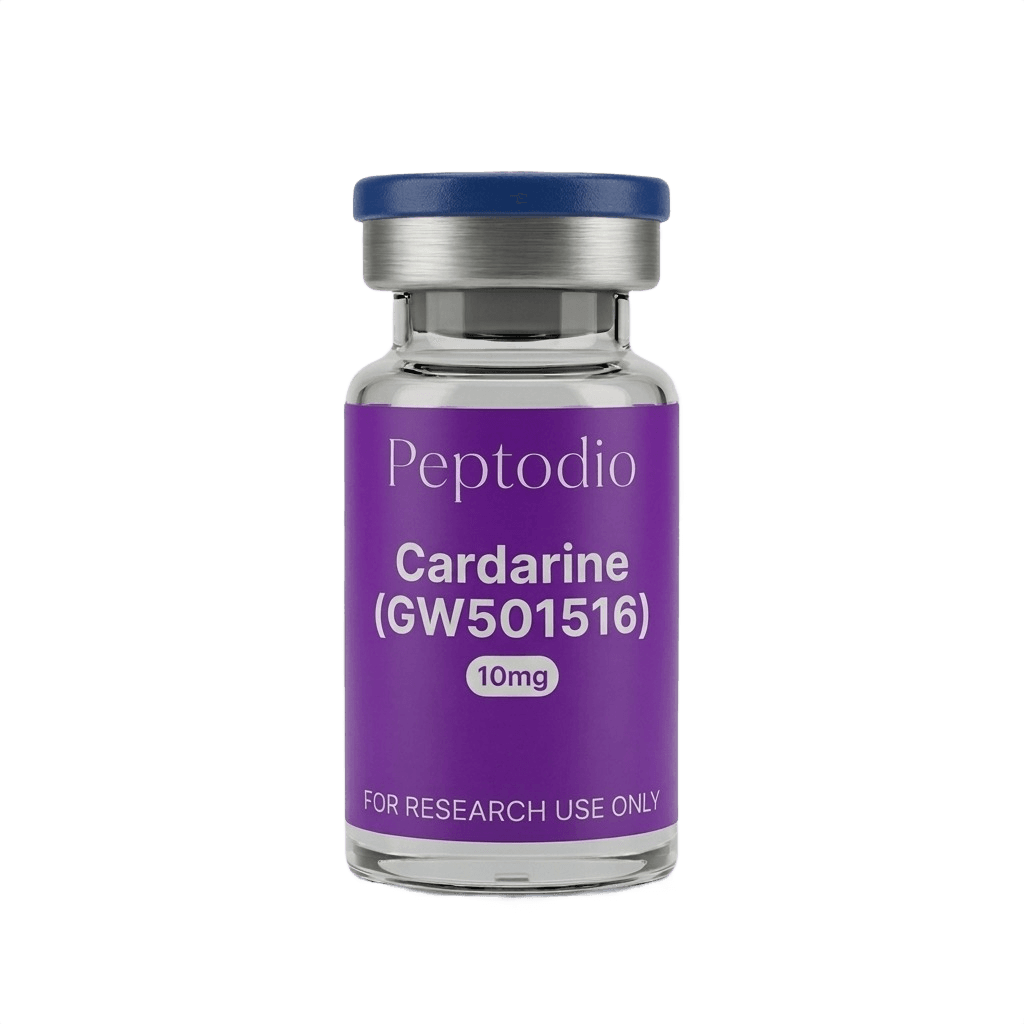
Cardarine (GW501516)
10mg/ml · 99%+ Purity
Description
Kisspeptin-10, a potent stimulator of gonadotropin-releasing hormone (GnRH), is primarily investigated for its role in reproductive endocrinology research. Studies explore its applications in fertility treatment models and the optimization of hormonal axes. Available at >99% purity.
Disclaimer: The images on this page are for illustrative purposes only. Peptodio is an educational resource and does not sell any products, nor will we ever. We do not recommend or endorse any sellers or vendors. This information is provided for research and educational purposes only.
Research & Science
Evidence-based information about this compound
Chemical Properties
CAS Number
317318-70-0
Molecular Formula
C21H18F3NO3S2
Molecular Weight
453.5 g/mol
Also known as:
GW501516, GW-501516, Endurobol
Cardarine (GW501516) is a selective PPARδ (peroxisome proliferator-activated receptor delta) agonist developed in the 1990s through a collaboration between GlaxoSmithKline and Ligand Pharmaceuticals. While often mistakenly classified as a SARM, cardarine is actually a metabolic modulator that does not interact with androgen receptors.
The compound was initially developed for metabolic and cardiovascular diseases due to its effects on lipid metabolism and endurance. Development was discontinued over safety concerns in preclinical studies, but it remains of significant research interest.
Cardarine's mechanism involves activating genes responsible for energy expenditure, making it unique among performance-related research compounds.
Cardarine works through PPARδ activation:
- PPARδ Agonism: Binds to and activates PPARδ nuclear receptors.
- Gene Transcription: Alters expression of genes involved in fatty acid oxidation.
- Fatty Acid Metabolism: Increases fatty acid catabolism in skeletal muscle.
- Muscle Fiber Shift: May promote type I (slow-twitch) muscle fiber development.
- Mitochondrial Biogenesis: Stimulates creation of new mitochondria.
Cardarine's endurance effects have been studied extensively:
- Running Capacity: Studies show dramatically increased running endurance in animal models.
- Fatty Acid Oxidation: Shifts metabolism toward greater fat utilization.
- Muscle Adaptation: Promotes oxidative muscle fiber characteristics.
- Mitochondria: Increases mitochondrial content and function.
These effects are mediated through genetic changes in metabolic pathways.
Sources:
Cardarine's metabolic effects include:
- Lipid Profile: Improves HDL cholesterol while reducing LDL and triglycerides.
- Insulin Sensitivity: May improve glucose handling.
- Body Composition: Promotes fat loss while preserving muscle.
- Inflammation: Shows anti-inflammatory effects in various models.
These properties made it attractive for metabolic disease research.
Sources:
This information is provided for educational purposes only and is based on published scientific research. This product is intended for research use only.