
A Question That Comes Up Constantly
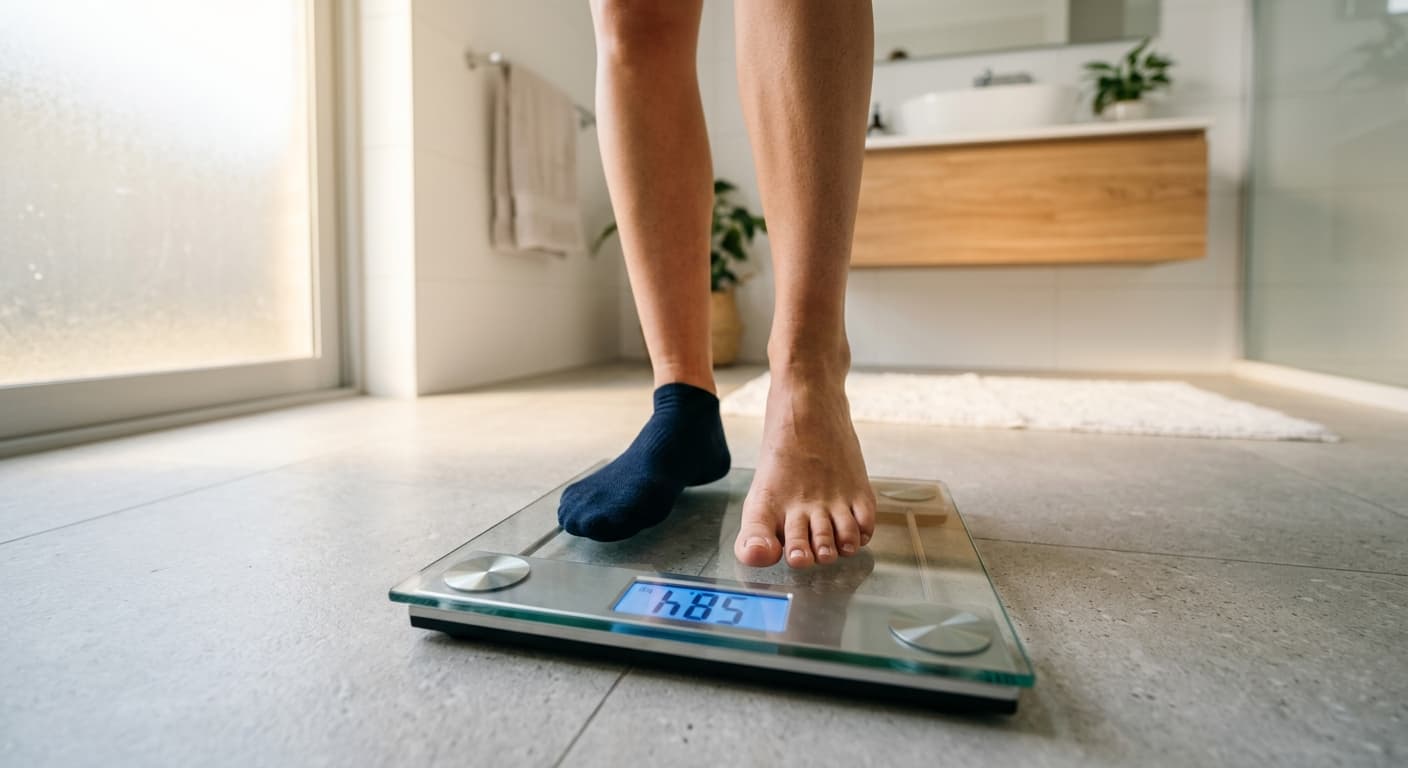
Now that GLP-1s are everywhere, a predictable pattern has emerged. Someone loses a large amount of weight on semaglutide or tirzepatide - 40, 50, 60 pounds - and notices their strength went down with it. The next thought is usually testosterone: maybe hormones are the missing piece, maybe a bit of TRT brings the strength back.
Then the labs come in showing testosterone comfortably in the normal range, often *higher* than it was before the weight loss. And the plan is usually to keep cutting with another GLP-1 at the same time.
There are three separate decisions tangled together in that scenario, and they're almost always treated as one. Untangling them gives a clearer answer than the usual forum reply, which tends to be some version of *"at a normal natural level you won't feel much from adding more test unless you push the dose up."* That observation is correct, and it quietly contains most of the answer.
Upfront: this article does not contain a testosterone protocol. Not as a dodge - the honest analysis leads somewhere else, and this kind of decision genuinely requires a physician and a full lab panel. What follows is the reasoning worth having before that conversation.
Decision 1: A Normal Reading Changes Everything
This isn't a TRT question
The term "TRT" does a lot of damage in these discussions. TRT means *replacement* - restoring a hormone that is deficient. The Endocrine Society's criteria for diagnosing male hypogonadism require consistent clinical symptoms plus unequivocally low morning total testosterone confirmed on at least two separate occasions, with the commonly used threshold sitting around 300 ng/dL.
Someone reading in the 600s is not borderline, not "low-normal," and not in a grey zone - that's comfortably mid-to-upper range at any age, and higher than plenty of men in their twenties.
So whatever is being considered at that level, it isn't replacement. There's nothing to replace. It means adding hormone on top of a normally functioning axis - a different intervention with a different name, a different risk profile, and different reversibility.
Why the number often rises after weight loss
This is the part worth sitting with, because it reframes the whole thing.
Adipose tissue drives testosterone down through several mechanisms - aromatase in fat tissue converts testosterone to estradiol, which suppresses the hypothalamic-pituitary signal, and obesity independently lowers SHBG. The condition even has a name: obesity-associated hypogonadotropic hypogonadism, and a systematic review and meta-analysis found that weight loss *reverses* it, with the magnitude of testosterone recovery tracking the magnitude of weight lost.
So a man in his forties whose testosterone climbs 200-250 ng/dL across a large weight loss is a textbook result, not luck. The weight loss fixed the testosterone. That's usually the most impressive outcome in the whole story - and it's the thing people then consider overriding.
What adding exogenous testosterone would do to that
Exogenous testosterone suppresses LH and FSH, which shuts down endogenous production. That's not a side effect, it's the mechanism - the body sees sufficient androgen and stops making its own.
So the trade is specific: swapping a self-sustaining level for a supplied one you now depend on. Come off, and you don't land back where you were - you land in a suppressed trough and recover from there over months, with no guarantee of returning to the starting point. In your forties, and especially with a history of oral androgens earlier in life, that recovery is worth taking seriously rather than assuming.
A good natural level after weight loss is the outcome most men on TRT forums are trying to buy. It would be an odd thing to spend.
Decision 2: Where Your Strength Actually Went
Here's the diagnostic error. Strength was lost during and after a large deficit, and the hypothesis being tested is "low testosterone." But testosterone went *up* over that window. The timeline rules it out.
So where did it go? Four places, all well documented, none hormonal:
1. You lost real lean mass. Energy restriction without adequate resistance training and protein costs fat-free mass - a systematic review in middle-aged and older adults found energy restriction alone produces significant fat-free mass loss, and that adding exercise substantially attenuates it. Reviews of GLP-1 receptor agonists specifically find lean body mass declines alongside fat mass. Roughly a quarter of a large unsupported loss coming from fat-free mass is a normal, expected figure. Across 50 or 60 pounds, that's a lot of tissue.
2. You were in a deficit, which suppresses performance independent of tissue. Lower muscle glycogen, impaired recovery between sessions, reduced neural drive, worse sleep in some people. You can lose measurable strength in a deficit without losing a gram of muscle, and regain it within weeks of eating at maintenance.
3. Leverage and bodyweight changed. Being dozens of pounds lighter changes every bar path and every groove, and removes a lot of the passive loading your body was adapted to. Absolute numbers went down. Relative strength - per pound of bodyweight - very likely went up, and that's the number that correlates with how you actually function.
4. Less training stimulus. Appetite suppression on a GLP-1 tends to reduce food intake across the board, including protein, and frequently reduces training volume because energy is down. That alone detrains you.
Not one of these is fixed by testosterone. Three of the four are fixed by eating and training differently, and the fourth partially reverses on its own.
Decision 3: Stacking Another GLP-1 Works Against the Goal
This is the internal contradiction that almost always goes unflagged. Two objectives get stated side by side:
Retatrutide is a triple agonist - GIP, GLP-1, and glucagon receptors - and is, if anything, a *more* aggressive weight-loss agent than tirzepatide. Running it means continuing in a deficit.
You cannot efficiently rebuild strength and lean mass while driving weight down. Not impossible at the margins - a detrained person in a modest deficit with high protein can make early progress - but it asks the body to do two opposing things while handicapping the one that supposedly matters. The lean mass already lost came from exactly this process. Doing more of it is not the path back.
And once a large loss has brought BMI down near the overweight/normal boundary, the urgency has changed - you're no longer in the risk category you started in. That's the natural point for a maintenance phase, not another cut.
If strength is the priority, the sequencing is: eat at maintenance, train hard, let tissue and performance come back over several months, *then* decide whether further fat loss is worth another deficit. Not simultaneously, and not with hormones papering over a nutrition and training problem.
Why "You Won't Feel Much Unless You Push the Dose Up" Is the Key Insight
That common forum reply is right, and the mechanism behind it matters.
Within the normal physiological range, the relationship between testosterone and muscle mass is weak. Someone at 650 ng/dL and someone at 500 are not meaningfully different in trainability. The dose-response for muscle gain only gets steep above the natural range - and when it does, it's unambiguous: supraphysiologic testosterone produces significant increases in muscle size and strength even in normal men, and even without training.
Follow that logic to its conclusion. To *feel* a difference, you'd need to be above your natural range. That isn't TRT. That's a cycle. And "not trying to get huge" is a perfectly coherent goal that happens to be incompatible with the only dosing that would produce the effect you're after.
Enjoying this article?
Subscribe to get notified when we publish new experiment reports and research findings.
No spam, unsubscribe anytime.
There is no small, cautious, replacement-style dose on top of an already-normal level that delivers strength without being supraphysiologic. That middle ground does not exist pharmacologically, and that's the real answer to the question.
What supraphysiologic use would commit you to
Not to talk anyone out of anything - but so the decision gets made with the full picture, particularly past forty:
That's a genuine, considered choice some people make with a physician. It is not a small one, and it shouldn't be the first thing tried when the actual cause of the problem is a long calorie deficit.
The Route That Actually Works
It's unglamorous, which is why it gets skipped:
Eat at maintenance. Stop the deficit. This alone recovers a meaningful chunk of strength within weeks, through glycogen and recovery, before any tissue is rebuilt.
Protein, 1.6-2.2 g/kg bodyweight. Meta-analysis of protein supplementation with resistance training shows benefit to lean mass and strength up to roughly 1.6 g/kg/day, with individual variation above that. On a GLP-1 this is the thing that silently fails, because appetite suppression cuts protein along with everything else. Most people in this position are undereating protein badly and have no idea.
Resistance train 3-4x per week, progressively. Compound movements with progressive load - not circuits, not machines-only. This is the variable that determines whether you keep what you've got: energy restriction plus exercise preserves substantially more fat-free mass than restriction alone.
Creatine monohydrate, 3-5g daily. Cheap, among the best-evidenced supplements in existence, and directly relevant to strength. If you want to add something, add this before anything injectable.
Sleep. Drives both recovery and endogenous testosterone.
Give it months. Detrained and post-large-weight-loss, there's substantial untapped potential sitting there. Most people in this position find that six months of real training at maintenance gets their strength back past where it was at the heavier bodyweight - and now they're carrying it several sizes smaller.
Then reassess. If all of the above has been done honestly for six months and you still feel genuinely impaired, that's a legitimate time to be in a doctor's office with a full panel - and a far more informative conversation than the one available today.
Where CJC-1295/Ipamorelin Honestly Fits
Since it's usually the other half of these plans, a straight assessment.
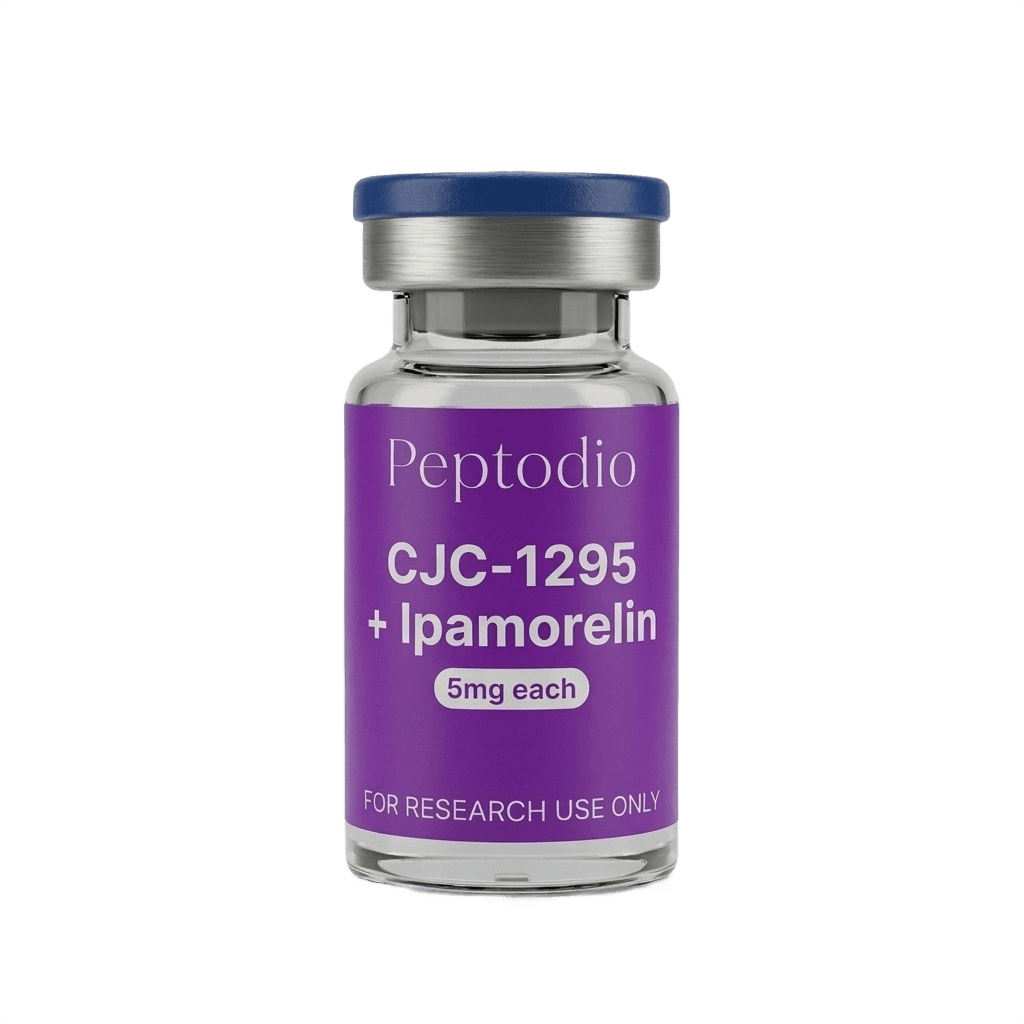
GH secretagogues are not anabolic the way androgens are. The realistic reported effects are improved sleep quality, better recovery between sessions, and modest body composition shifts over months. CJC-1295 as a GHRH analog produces sustained elevation of GH and IGF-1, and ipamorelin adds a selective GH pulse without meaningfully touching cortisol or prolactin. That's a real mechanism - but it won't restore strength lost to a long deficit, and it won't do much of anything while you're still in one.
The age argument is more favorable here than for the 20-somethings who usually ask about this stack - endogenous GH output declines with age, so there's more headroom in your forties than in your twenties. See our CJC-1295 + Ipamorelin in your 20s breakdown for that contrast. But sequence it correctly: it's an adjunct to good training and eating, not a replacement for them, and running it alongside retatrutide while trying to regain strength is asking it to swim upstream.
The Straight Answers
Should I add testosterone at a normal level to get strength back?
At a normal level this isn't replacement, and within the normal range the effect on strength is weak. To feel it you'd need supraphysiologic dosing - which conflicts with "not trying to get huge" and carries an indefinite commitment. The strength loss also has a clearer cause that testosterone doesn't address.
Why did my testosterone go up after losing weight?
Almost certainly the weight itself. Weight loss reverses obesity-associated hypogonadotropic hypogonadism, and recovery scales with weight lost. Exogenous testosterone would suppress the axis that just recovered.
Where did my strength go?
Lean mass lost in an unsupported deficit, plus deficit-driven performance suppression, plus changed leverage at a much lighter bodyweight, plus reduced training stimulus. Hormonal explanations don't fit the timeline, because testosterone rose.
Should I switch to retatrutide and CJC/Ipamorelin?
The CJC/Ipamorelin is defensible as a recovery adjunct. The retatrutide directly contradicts the strength goal - it means staying in a deficit, which is what cost the lean mass in the first place. After a large loss, a maintenance phase is the more useful next move.
What should I do instead?
Maintenance calories, 1.6-2.2 g/kg protein, progressive resistance training 3-4x/week, creatine, sleep, and six months of patience. Reassess with a physician and full labs after that if you still feel impaired.
One Last Reframe
Losing a large amount of weight and gaining a couple of hundred ng/dL of testosterone in the process is the version of this story people are chasing when they go looking for hormones in the first place.
The strength is recoverable through the boring route, and probably past the old numbers at a much lighter bodyweight. The thing worth protecting is the endogenous level - and in most of these plans, the only item on the list that threatens it is the one being leaned toward.
Recovery Support Peptides
Working out where a compound fits around a GLP-1 taper or a maintenance phase? Describe the situation through the [contact page](/contact).
Disclaimer: This article is for informational purposes only and is not medical advice, nor a protocol. Testosterone is a controlled substance in many jurisdictions and its use requires evaluation and prescription by a qualified physician. Decisions about hormone therapy should be made with a doctor using full laboratory workup. Peptides are sold for research purposes and are not intended for human consumption.